Home»News»Cost-effective emission-free construction with SHERPA
Cost-effective emission-free construction with SHERPA
1 July 2026
In the Netherlands, we are moving increasingly towards fully emission-free construction. Today, construction projects are regularly halted due to nitrogen emissions. In addition, the Central Government Real Estate Agency, part of the Dutch government, wants virtually no diesel-powered machines to be used on construction sites by 2030.
And what about zero-emission zones? At the moment, these only apply to vans and trucks, but it is not unthinkable that they may also apply to construction machinery in the future.
Whether we like it or not, electrification is the future. Thanks to legislation and subsidy schemes, you can purchase an emission-free SHERPA at a more favourable cost.
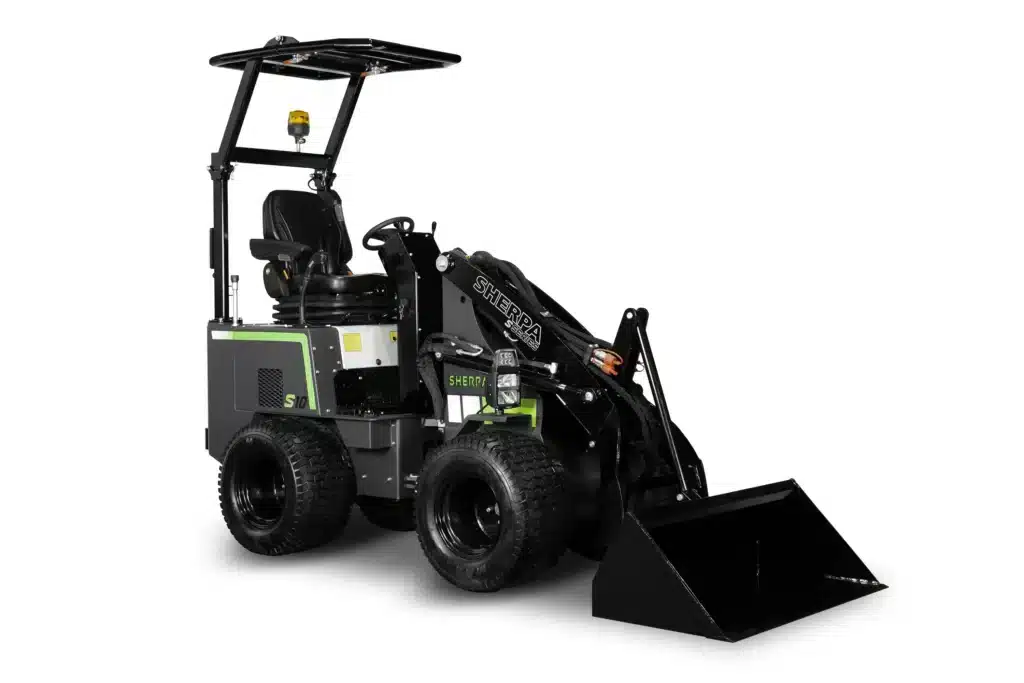
The proven electric miniloader
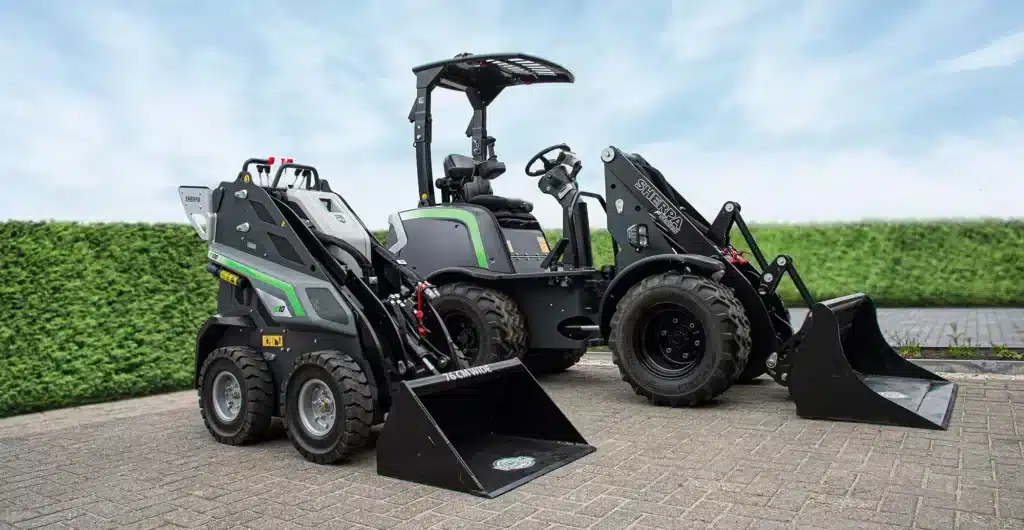
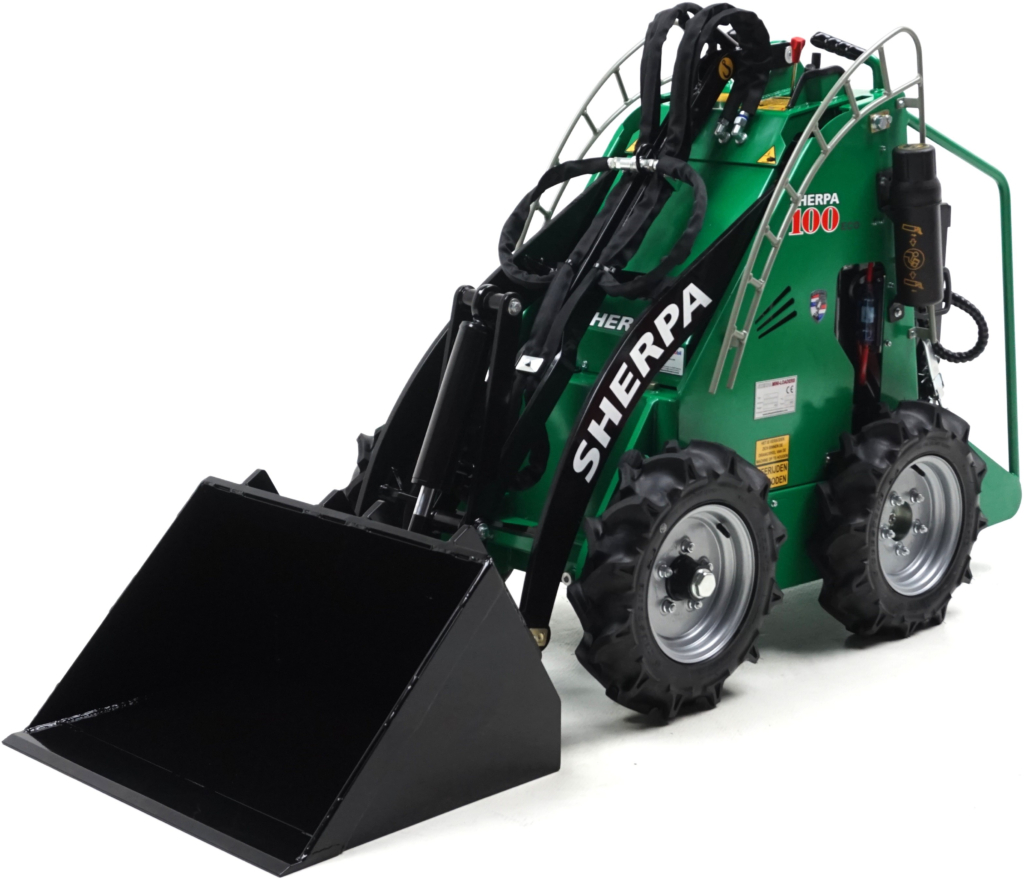
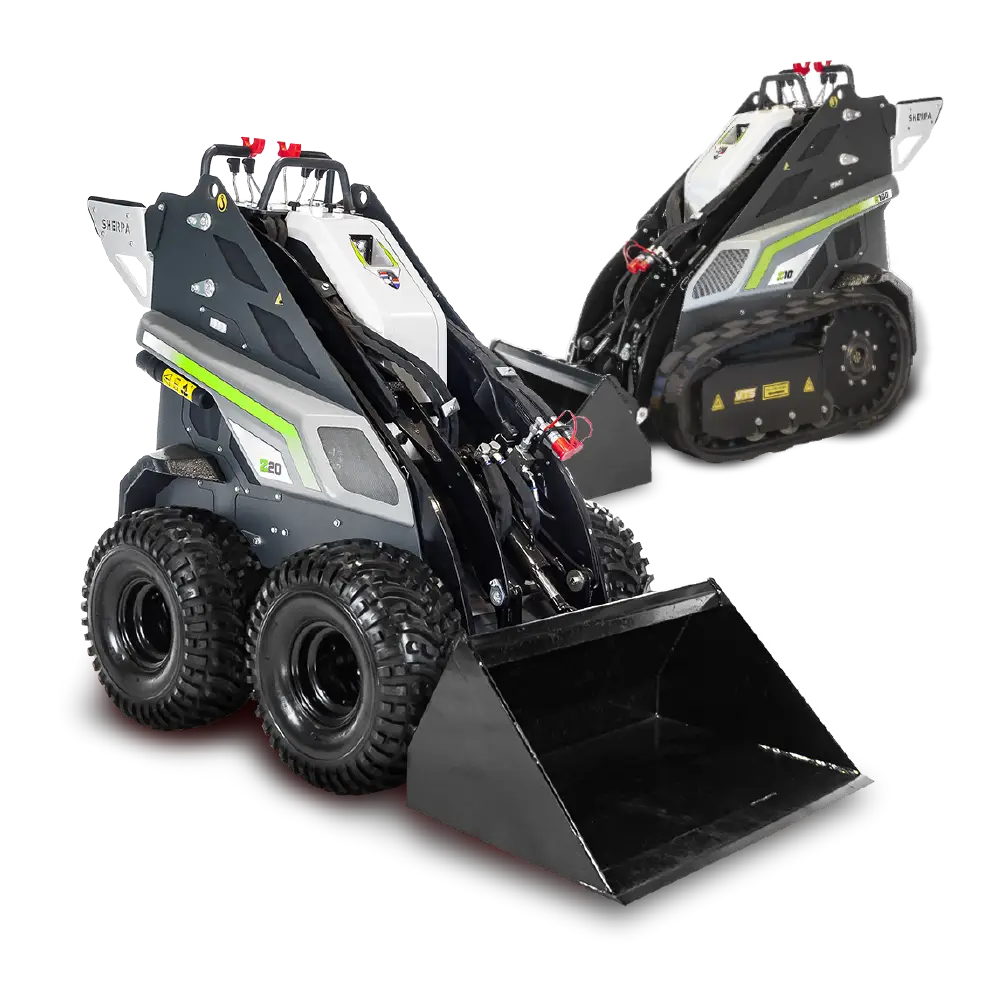
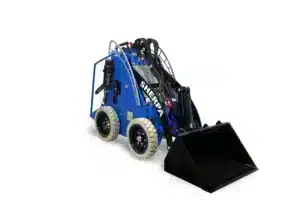
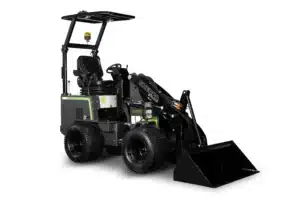
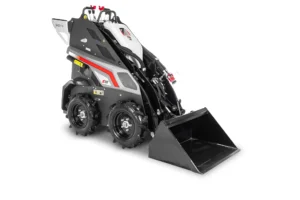
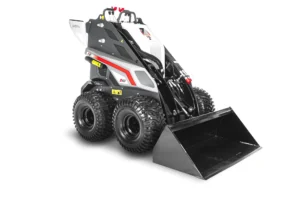
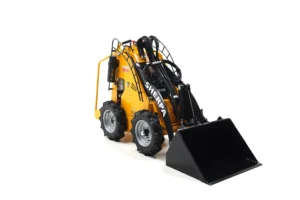
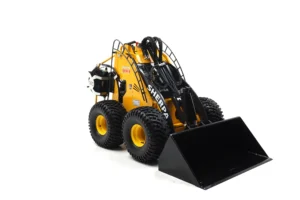
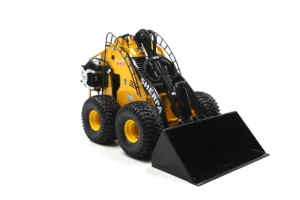
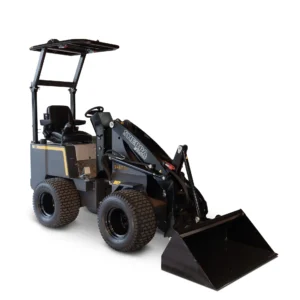
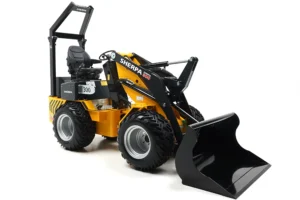
While many manufacturers have only recently started offering electric machines, SHERPA developed its first electric miniloader back in 2011: the SHERPA 100 Eco. This made it one of the first emission-free miniloaders on the market. Thanks to this many years of experience, we now know that a SHERPA is not just a strong machine on paper, but one that has been tested in real-world conditions through years of intensive daily use. Today, our range of electric miniloaders has expanded even further, and we offer several different models.
Differences in TCO between electric and conventional machines
Despite the higher purchase price, the combination of lower energy and maintenance costs means that, in many applications, an electric miniloader is cheaper over its lifetime than a conventional diesel machine.
Did you know we have written a white paper on how to calculate TCO?
WHITEPAPER
TCO & ROI: What does a machine really cost?
It is not just about the purchase price, but about the total costs and returns of a machine. How do you calculate these? This document teaches you how to make a thorough and accurate calculation, so you can get the maximum return from your machine.
To encourage the sustainability of construction equipment, several financial schemes are available to entrepreneurs. The most important scheme for emission-free construction equipment is the SSEB: the Clean and Emission-Free Construction Equipment Subsidy Scheme. In addition, tax schemes such as MIA, Vamil and, in some cases, EIA may also be worth considering.
SSEB: subsidy for clean and emission-free construction equipment
The SSEB is intended for entrepreneurs who invest in clean and emission-free construction equipment. This includes the purchase of a new emission-free machine, such as an electric SHERPA, or the conversion of existing equipment to emission-free or low-emission operation.
For entrepreneurs, this scheme can make a significant difference. The subsidy is designed to compensate for part of the additional cost of emission-free equipment compared to a similar machine with a combustion engine. This makes the switch to electric working more financially attractive.
That advantage is not limited to the subsidy alone. With an electric SHERPA, you work emission-free, more quietly and with lower operating costs than with a comparable diesel machine. You save on fuel and maintenance, while also being better prepared for stricter environmental requirements, tenders and clients who increasingly value clean construction.
The scheme is particularly relevant for companies active in construction, infrastructure, demolition or other projects where emissions play an important role. Companies that want to rent out emission-free equipment may also be eligible.
Why switch now?
You may be able to receive a subsidy on the purchase of emission-free construction equipment.
You reduce your operating costs by working electrically.
You work more quietly and without emissions on site.
You are better prepared for stricter regulations and tender requirements.
You contribute to the objective of significantly reducing emissions in the construction sector.
The exact possibilities depend on the type of machine, its application, your company size and the current conditions of the scheme. SHERPA is happy to think along with you about the right machine and can help clarify which subsidy and tax benefits may be relevant to your situation.
MIA and Vamil: tax benefits for environmentally friendly investments
In addition to the SSEB subsidy, MIA and Vamil may also be worth considering. These are tax schemes for entrepreneurs who invest in environmentally friendly business assets listed on the Environmental List.
With MIA, the Environmental Investment Allowance, you can deduct an additional part of the investment amount from your taxable profit. As a result, you pay less corporate tax. This is therefore not a direct discount on the purchase price, but a tax benefit through your tax return.
With Vamil, Random Depreciation of Environmental Investments, you can depreciate up to 75% of the investment costs at a time of your choosing. This does not make the investment directly cheaper, but it can provide a tax advantage by allowing you to shift the tax burden to a moment that is favourable for your business. In practice, this can result in a liquidity and interest benefit.
Always ask your accountant or tax adviser to assess whether this is beneficial in your specific situation.
EIA: potentially interesting for energy-efficient investments
In some cases, EIA, the Energy Investment Allowance, may also be relevant. This scheme is intended for investments in energy-efficient technologies and sustainable energy that are listed on the Energy List. Examples include certain facilities related to charging, energy storage or power supply. Important to know: EIA and MIA cannot be combined for the same investment. Which scheme is most beneficial therefore depends on the machine, its application and your company’s tax situation. Schemes change regularly and budgets may be limited. Therefore, always have it checked in advance which subsidy or tax scheme applies to your investment.
Curious about the possibilities?
Are you considering purchasing a SHERPA and curious which schemes or tax benefits may apply to your situation? Daan and Gijs know exactly what options are available and will be happy to explain how you can make the most of the available benefits.
Schedule a consultation?
Want to know more about the possibilities of emission-free working, subsidies or tax benefits?











 +31 (0)412 - 613 344
 info@sherpaminiloaders.com